Services
Vegetation & dual-use for owners and O&M
Solar grazing, cattle in the rows between the panels, hybrid livestock + residual mowing (mechanical), and design-before-steel consulting — framed around outcomes operators can schedule, audit, and report.
01
Solar grazing — sheep
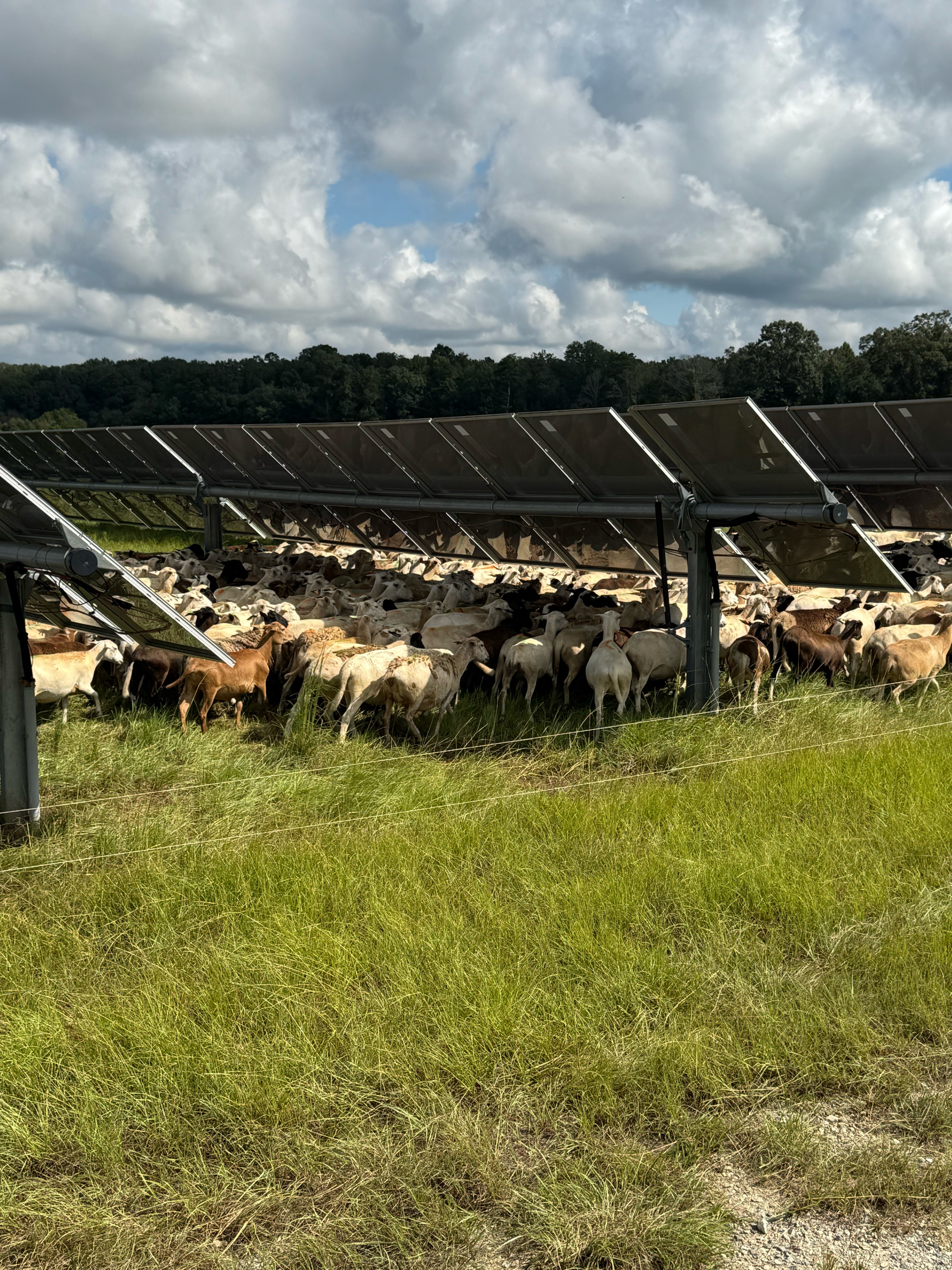
Katahdin hair sheep under the panels are the Southeast workhorse for utility-scale vegetation management. They keep growth down where mowers struggle and support honest herbicide reduction where grazing is the primary control.
We deliver reporting-ready grazing plans: stocking rates, fencing (including virtual fencing where appropriate), animal welfare, and access windows aligned with plant work — so O&M can run the program, not babysit a hobby flock.
Owner / O&M benefits
- Vegetation height outcomes under modules
- Fewer spray cycles where grazing reliably meets targets
- Clear access/safety coordination with electrical O&M
- Habitat and community signal — land that still looks like a farm
02
Cattle in the rows between the panels
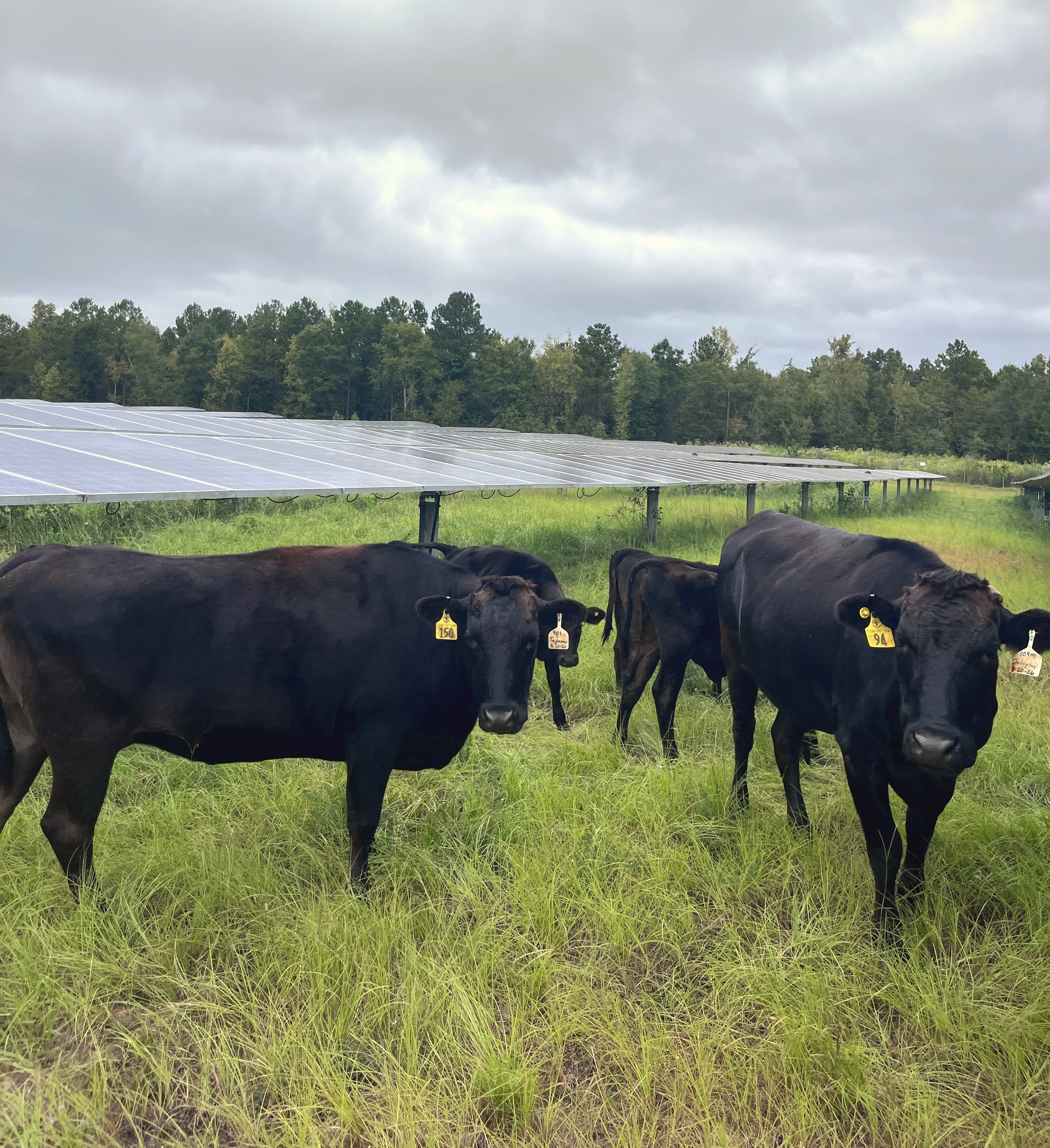
Where row spacing and clearance allow, Wagyu cattle (dehorned, docile, smaller-frame animals) grazing in the rows and under the panels — smaller frame welcome for real dual-use geometry.
This is not cattle forced under low modules. Designed layout: cattle work the open rows; Katahdin handle under the panels. Same farm standards for welfare, fencing, and vegetation outcomes.
Owner / O&M benefits
- Row vegetation managed without compromising module clearance
- Dual-use narrative counties and neighbors understand
- Dehorned, docile, smaller-frame stock suited to working solar sites
- Pairs cleanly with sheep under the panels on the same plant
03
Hybrid livestock + residual mowing
Most sites still need a blade somewhere. We design a habitat-aware hybrid: livestock first where it works, then complementary residual control with mechanical mowing (tractor or deck) for tight strips, keep-outs, open rows, and access roads — with electrical zones protected.
Sheep, cattle, and mechanical mowing work as a complementary vegetation program operators can schedule and put in the O&M binder. Plans stay honest about what animals can and cannot do.
Owner / O&M benefits
- Livestock-first zones with residual mow strips mapped
- Mechanical residual mowing called out by zone
- Protected access roads and electrical keep-outs
- Habitat-aware edges and pollinator-friendly buffers where welcome
- Reporting language that matches field reality
04
Agrivoltaics consulting & site design
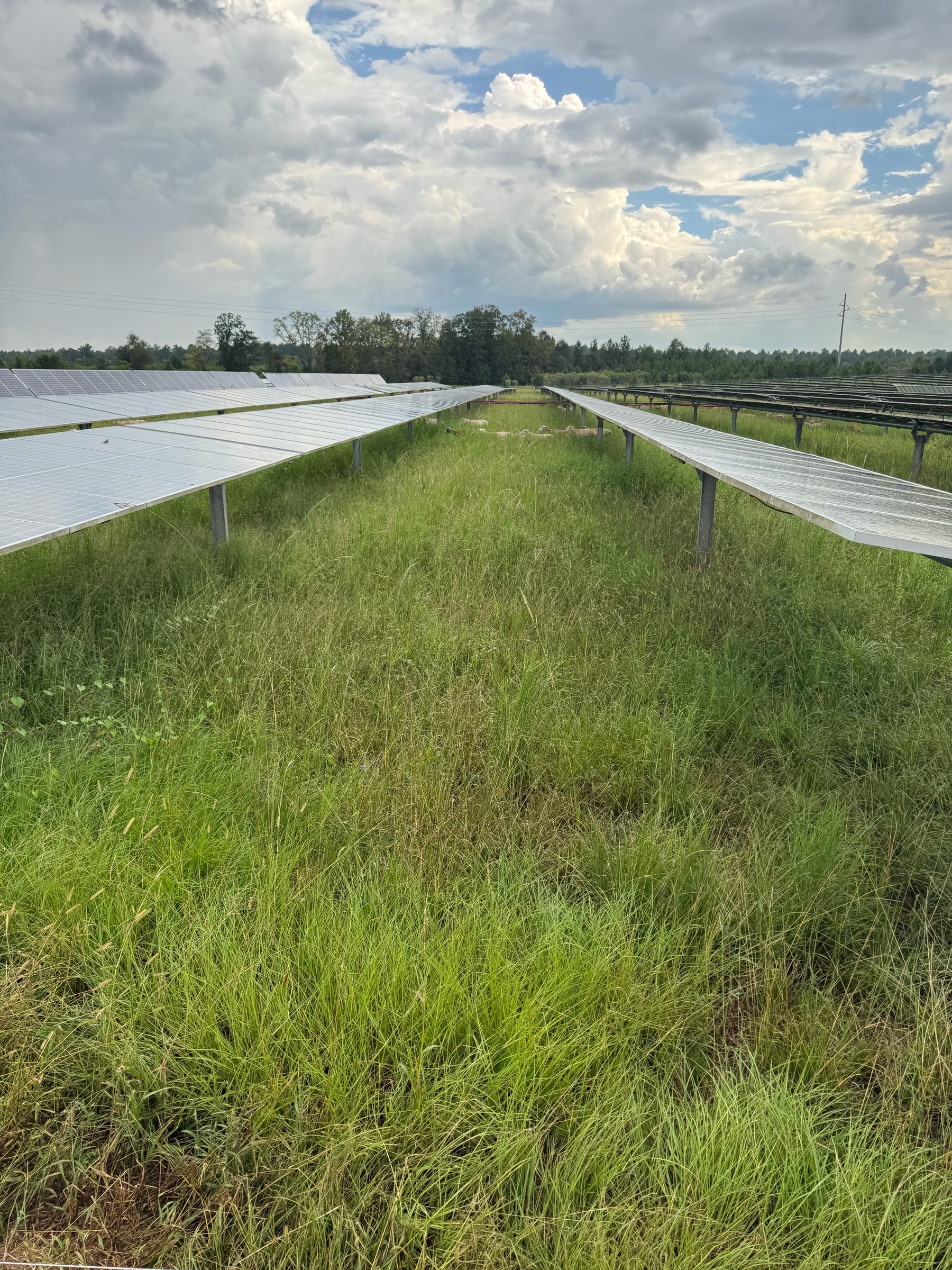
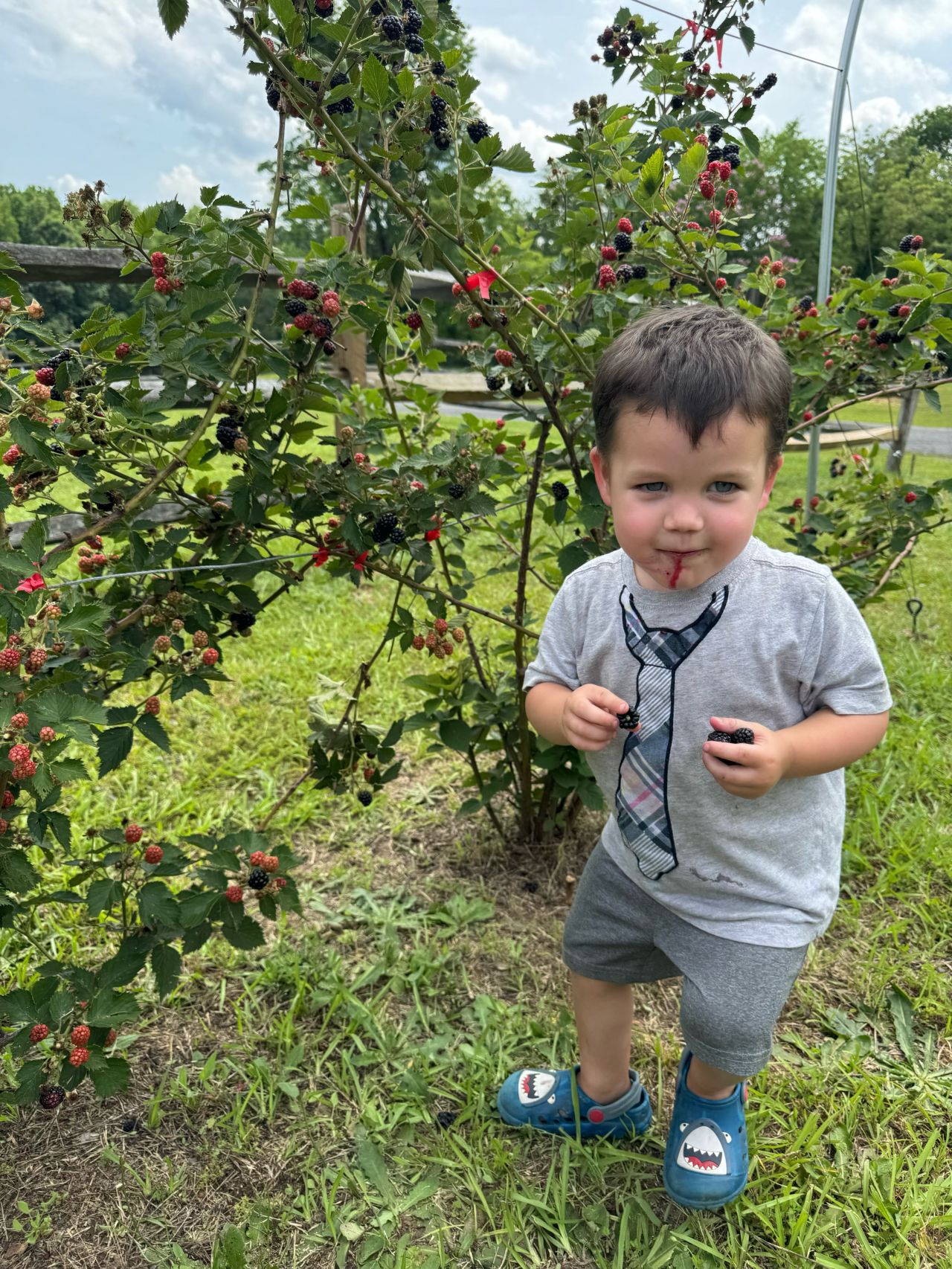
Design-before-steel. Dual-use fails when water, row spacing, and farmer access are bolted on after racking. We help owners and developers plan cattle in the rows between the panels, sheep under the panels, cane berry crops under arrays, and cut-flower edges — with water access designed in early.
The plant stays the plant. The land stays a farm that sells food — not only a perpetual mower invoice.
Owner / developer benefits
- Early geometry and water reviews before steel
- Crop and flower strips where harvest can sell
- Farmer-principal role defined for the life of the plant
- Vegetation strategy that survives commissioning into O&M
05
HB Young Shepherds & education partnerships
HB Young Shepherds is our program with 4-H and FFA to grow the farmer-partner pipeline and lead a new generation into agriculture — youth learn real livestock skills on solar land and become the next graziers we partner with. Learn about HB Young Shepherds →
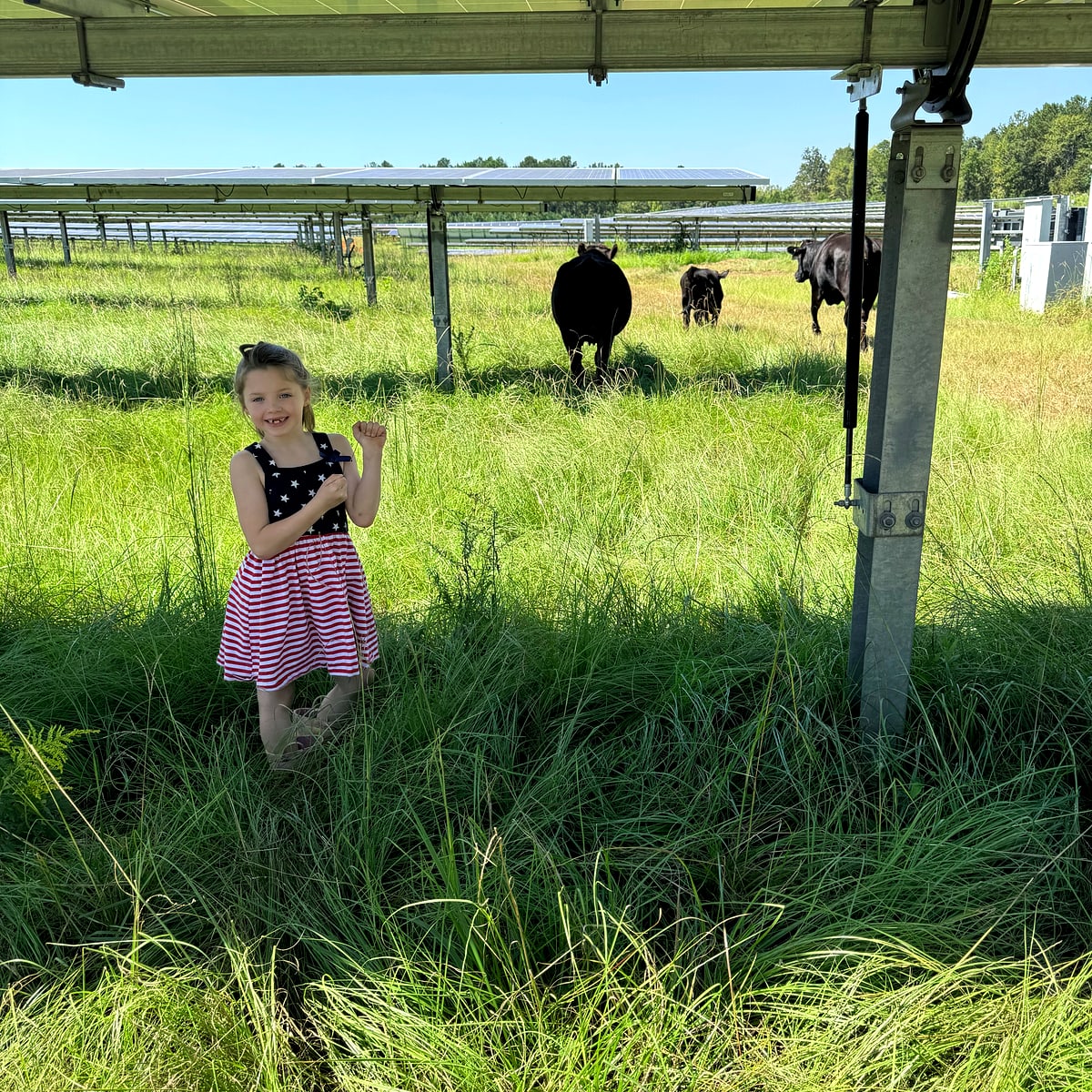
From York County, South Carolina, we welcome colleges, extension educators, FFA, and 4-H where it fits the site and the season. Students see sheep under the panels, cattle in the rows between the panels, and residual mowing done with intention — not a brochure farm, a working plant with a farmer at the table.
What we offer is a potential pathway: coordinated visits, honest applied learning, and a warm on-ramp for young people who might one day hold a graze license or run dual-use programs of their own.
Owner / developer value
- Community and habitat signal — land that still looks and feels like a farm
- Tour-ready dual-use story for neighbors, counties, and stakeholders
- Local allies who understand fencing, welfare, and O&M access windows
- A respectful path for students into solar grazing and dual-use careers
Colleges & extension
Ag, engineering, and extension collaborations for site visits and applied learning on real dual-use geometry — vegetation outcomes, farmer-principal roles, and design that survives commissioning into O&M.
- Hosted visits timed with plant access and safety
- Extension-friendly language owners can reuse in reports
- Educated local partners, not just a one-day photo op
HB Young Shepherds — FFA & 4-H
Youth programs that show solar land as working farm country — livestock, habitat they can respect, and cut flowers at the edge where sites allow. Hands-on learning that builds care for animals and for the plant.
- Age-appropriate farm visits and edge-of-array learning
- Respect for fencing, welfare, and keep-out zones
- Community goodwill neighbors can see and share
Site tours & workforce path
Structured site tours and a next-gen on-ramp into solar grazing and dual-use careers — so the future of vegetation O&M is not only someone else’s mower contract.
- Tours coordinated with O&M windows and electrical keep-outs
- Path toward graze licenses and dual-use skill-building
- A clear story neighbors and county meetings can see and trust
Discuss your site
Share acreage, panel height, current vegetation approach, and timeline. We will tell you honestly what sheep, cattle, hybrid O&M, or consulting can do.